
How OpenAI Search Handles Paywalls and Subscriber Content
How OpenAI search handles paywalls, publisher deals and subscriber content, plus practical checks to protect paid articles and verify citations.

OpenAI search, usually experienced as ChatGPT Search, can cite a subscriber-only article without having unrestricted access to its full text. A citation is not proof that a paywall was bypassed. An answer might draw on a public preview, information reported elsewhere or material available through a publisher agreement.
For publishers, the practical challenge is separating discoverability from entitlement: you may want people to find an investigation without exposing the reporting that funds subscriptions. Readers face a different problem: deciding whether an answer actually supports its claims when the cited evidence sits behind a login.
This guide focuses on ChatGPT’s web-search experience. SearchGPT was an earlier prototype, while API search tools and other research features may have different workflows. Check the current ChatGPT Search documentation when making product-specific decisions.
What a paywalled citation actually proves
A citation establishes that an answer points to a URL. By itself, it does not establish how much of that page was retrieved, whether licensed content was available or whether the cited page supports every nearby claim.
A publisher’s headline and introductory paragraph might be public while the analysis remains restricted. Another publication might also quote or independently report the underlying finding. Either situation can support some discussion of the story without establishing access to its complete text.
The distinction matters commercially and editorially. Publishers should not diagnose unauthorized access from a citation alone, and readers should not mistake a linked headline for verification of a detailed summary.
How OpenAI search encounters different paywalls
The word paywall describes several access models. Their implementation affects what an unauthenticated request can receive, but technical availability and permission to reuse material remain separate questions.
| Publishing model | What an unauthenticated visitor may receive | What a citation does not establish |
|---|---|---|
| Hard login or subscription wall | A title, metadata, preview or access-denied response | That the complete article was retrieved |
| Metered access | Article access until a publisher-defined limit is reached | That all users or automated requests receive identical access |
| Browser-side overlay | Potentially more content than the visible preview, depending on implementation | That visually hidden content is securely protected or licensed for reuse |
| Public excerpt with subscriber analysis | The deliberately published introduction or summary | That conclusions from the restricted section were available |
| Content supplied under an agreement | Material covered by the particular arrangement | That every article or every downstream use is included |
A browser-side overlay deserves particular attention. If the server sends the complete article and JavaScript merely covers it, the subscription boundary may be visual rather than an enforced access boundary. Publishers should audit that configuration rather than assume the presence of a subscription prompt proves protection.
Conversely, a correctly enforced login may leave only a useful public landing page. That page can still help people discover the article and understand why subscribing might be worthwhile.
Publisher partnerships create a separate access route
Publisher agreements are one reason OpenAI search cannot be understood solely by inspecting an anonymous browser session. Material unavailable through ordinary public browsing may be supplied through a separate authorized arrangement.
In its News Corp partnership announcement, OpenAI described access to current and archived content from selected publications. That announcement documents a specific commercial relationship, not universal access to subscription journalism.
Licensed access for an AI product is different from subscriber access for a person. A publisher agreement does not necessarily make the linked article free to read. Likewise, paying for ChatGPT does not automatically include subscriptions to the publications appearing in its answers.
For a publisher considering an agreement, the useful questions concern scope: which publications and archives are included, what uses are permitted, how attribution works and what happens when content is corrected or withdrawn. Search inclusion, answer generation and model training should not be assumed to carry identical rights.
For readers, the implication is simpler. An answer may provide information while its source link still leads to a subscription prompt. That experience alone does not identify the underlying access arrangement.
Crawl controls are not subscription security
For OpenAI search, publisher controls involve more than a single “allow AI” decision. OpenAI documents different agents for different purposes in its official crawler guidance:
- OAI-SearchBot supports discovery and inclusion in search experiences.
- GPTBot is associated with crawling content that may be used to train foundation models.
- ChatGPT-User handles certain user-initiated visits; OpenAI notes that robots.txt rules may not apply to these user-triggered actions.
These distinctions let publishers make separate choices about search discovery and training-related crawling. They do not create a subscriber authentication system. Our explanation of how AI web search crawlers access websites covers the broader differences between background crawling, user-triggered retrieval and search-provider access.
A robots.txt directive expresses a crawling policy to agents that follow it. It does not prevent an otherwise public endpoint from returning content, and blocking one crawler does not remove information published on other websites.
Use authentication and authorization to enforce paid access. Use crawler directives to communicate crawling preferences. Where bot identity matters, follow the provider’s documented verification methods rather than trusting a user-agent string alone.
Because agent behavior and documentation can change, review the live guidance before deploying rules. Record the intended business outcome as well as the technical setting so future teams know why it exists.
A publisher workflow for protecting paid value
Define the public article layer deliberately
An effective OpenAI search strategy starts with an editorial decision: what should a non-subscriber be able to learn about this article?
For many publications, that includes the headline, author, publication date, a short introduction and a clear explanation of the reporting’s value. Other publishers may choose a public abstract or a separate methodology page. These are publishing choices, not guaranteed ranking factors.
The public layer should accurately describe the work without exposing the entire paid conclusion by accident. If a subscriber investigation includes a proprietary dataset, for example, its landing page could explain the dataset’s scope and collection method without publishing the restricted records.
Keep that boundary consistent across delivery channels. Review social metadata, structured data, mobile responses and public APIs alongside the visible page. A restricted article body should not unexpectedly appear in an unauthenticated response merely because the desktop layout hides it.
This approach gives potential readers useful context while preserving a reason to subscribe. It also reduces ambiguity when you later investigate what an external system could actually access.
Enforce entitlement at the server and cache layers
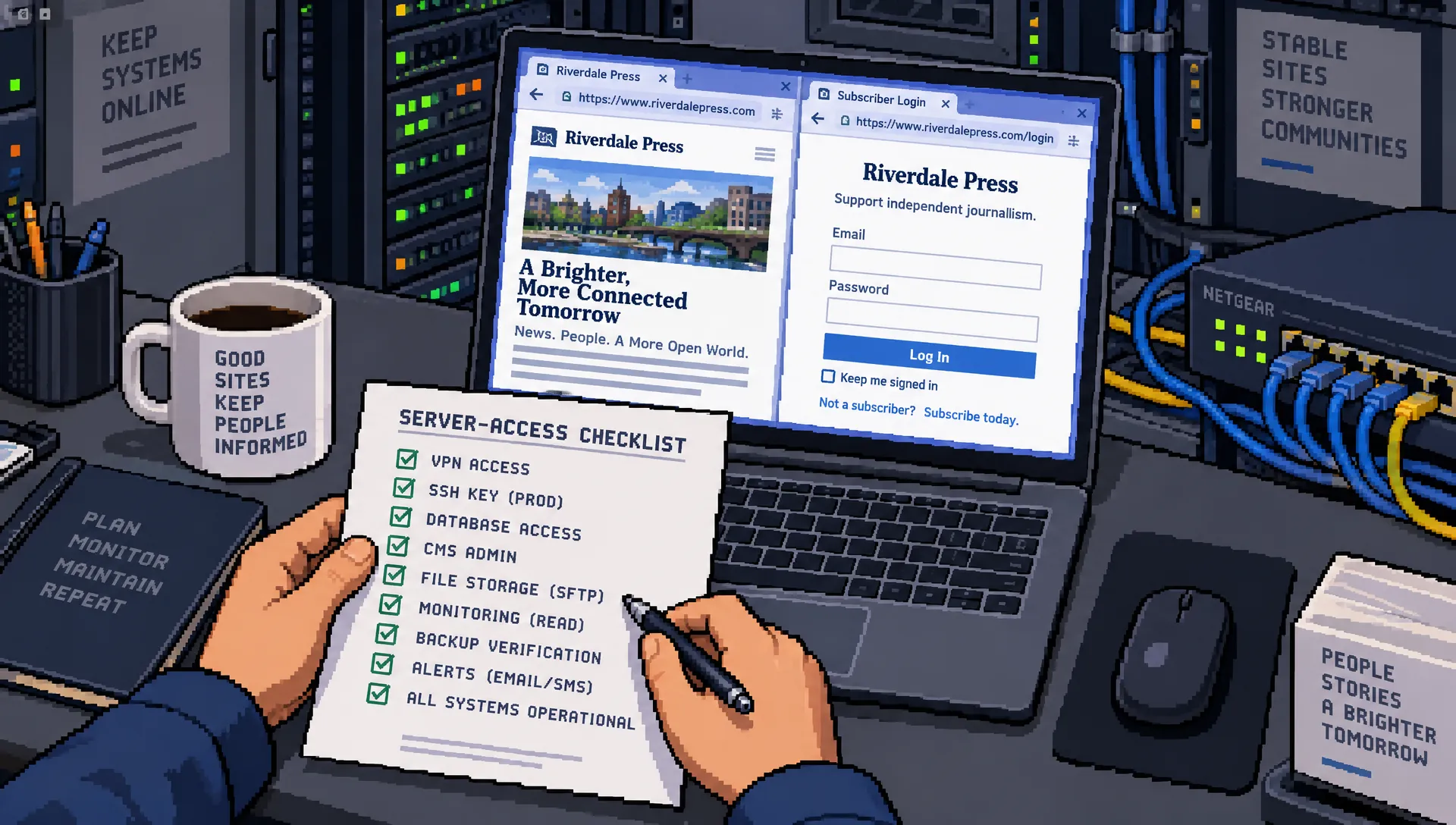
Test the article as a logged-out visitor, not just as an editor with an active subscription. Inspect the response body as well as the rendered page. Check whether a direct endpoint, alternate template or embedded payload exposes material that the public view is meant to withhold.
Caching deserves its own review. A subscriber response must not become a shared public response because of an incorrect cache key or edge rule. Authentication checks should remain effective across the origin, content delivery network and any application interfaces serving article text.
If OpenAI search appears to reproduce restricted details, preserve the output and investigate these delivery paths before concluding that the system defeated authentication. The information may also exist in a public excerpt, a syndicated version or another source.
Bring in infrastructure expertise when needed. For organizations in Réunion and Mayotte, MDSI’s infrastructure and cybersecurity services are relevant to reviewing hosting and access controls, a separate task from negotiating editorial licensing rights.
The objective is not to hide the subscription prompt more effectively. It is to ensure that unauthenticated requests receive only the content the publisher intends to make public.
Describe the paywall without treating markup as a lock
Google’s documentation for subscription and paywalled content describes markup including isAccessibleForFree and hasPart for identifying restricted content. This can help communicate a page’s access model to systems that support that markup.
It is not an access-control mechanism. Setting a property to false does not encrypt an article, remove its text from a response or establish a licensing agreement.
Do not assume OpenAI search follows every Google-specific interpretation of structured data or snippet controls. Apply relevant standards accurately, but distinguish documented platform behavior from an untested expectation.
Review the markup itself for unintended disclosure. If a field contains the complete subscriber article, changing its access label does not make the text unavailable to whoever can retrieve that field. Your structured data and your actual delivery policy should tell the same story.
Test retrieval separately from answer visibility
A useful audit has two parts. First, establish what your systems deliver to different request types. Then examine what appears in answers. Combining those questions too early makes diagnosis harder.
For each test, record the article URL, publication date, public preview, access requirements and any relevant licensing or syndication arrangements. Keep the prompt, answer, citations and test time together. Search results can vary, so a single response should be treated as one observation rather than a permanent state.
When evaluating OpenAI search, compare the disputed statement with the exact cited page and any other cited sources. Ask whether the detail was genuinely restricted, publicly quoted elsewhere or inferred without adequate support. None of those possibilities should be assumed in advance.
If the output includes restricted wording, preserve the relevant text and check whether it appears in public feeds, partner sites or previously exposed versions. A current access test cannot, by itself, establish what was publicly available earlier.
For implementation checks, use our AI SEO crawl audit checklist for publishers. Keep the investigation evidence-based: visible output alone does not establish a particular retrieval route or use in model training.
How readers should handle a paywalled citation
Use OpenAI search to locate relevant reporting, then verify important claims at the source whenever possible. A well-written answer can still attach a citation that supports only part of a sentence or discusses a related point.
Open the cited page and check its title, author, date and visible context. Distinguish a source you have actually read from one that the assistant has merely linked. For claims involving money, health, law or consequential business decisions, that difference should affect how confidently you rely on the answer.
If the full article is unavailable, look for an accessible primary source such as the original research paper, court filing, financial report or public dataset. A conventional search engine or a specialist database may be better for locating those documents than another conversational summary.
You can also ask the assistant to identify which cited passage supports a claim and to distinguish directly supported facts from inference. Its response still needs checking; asking for evidence does not create evidence that was never retrieved.
For a broader verification process, follow our guide to using AI search without trusting every answer. If only the subscriber article contains the necessary reporting, legitimate subscription or library access may remain the appropriate next step.
Frequently asked questions
Can OpenAI search read every paywalled article? No universal access should be assumed. What is available depends on the publisher’s technical implementation, public material, relevant agreements and the particular product workflow. A citation does not establish that the full article was read.
Does a ChatGPT subscription include access to newspaper subscriptions? Not automatically. A ChatGPT plan and a publication’s subscription are separate products. Do not assume either subscription transfers its access rights to the other service.
Can ChatGPT use my existing publisher login? Do not assume your browser’s publisher session is shared with ChatGPT. Any explicitly supported connection or authenticated workflow would need its own documentation. Never paste passwords or session cookies into a chat to enable access.
Does blocking GPTBot remove a publication from search? GPTBot and OAI-SearchBot have different documented purposes. Blocking the training-related crawler is not the same decision as blocking the search crawler, and neither setting removes reporting available through other sources.
Can I get a full subscriber article by requesting a summary? A summary request does not establish access to the article or authorization to reproduce it. If the full text is unavailable, treat a detailed response cautiously and check what its sources actually support.
Does a citation prove copyright infringement or a licensing agreement? Neither conclusion follows from a citation alone. Determining the source, access route, applicable rights and actual use requires additional evidence.
Make the access boundary explicit
Start with one representative subscriber article. Document its public preview, test its unauthenticated responses and review its crawler rules separately from its licensing terms. Then compare those findings with any observed AI citations.
That small audit produces a clearer decision than either allowing everything for visibility or blocking everything out of uncertainty: publish useful context deliberately, enforce subscriber entitlement technically and verify claims against evidence.
Read more
How to Manage Your Privacy in ChatGPT Search
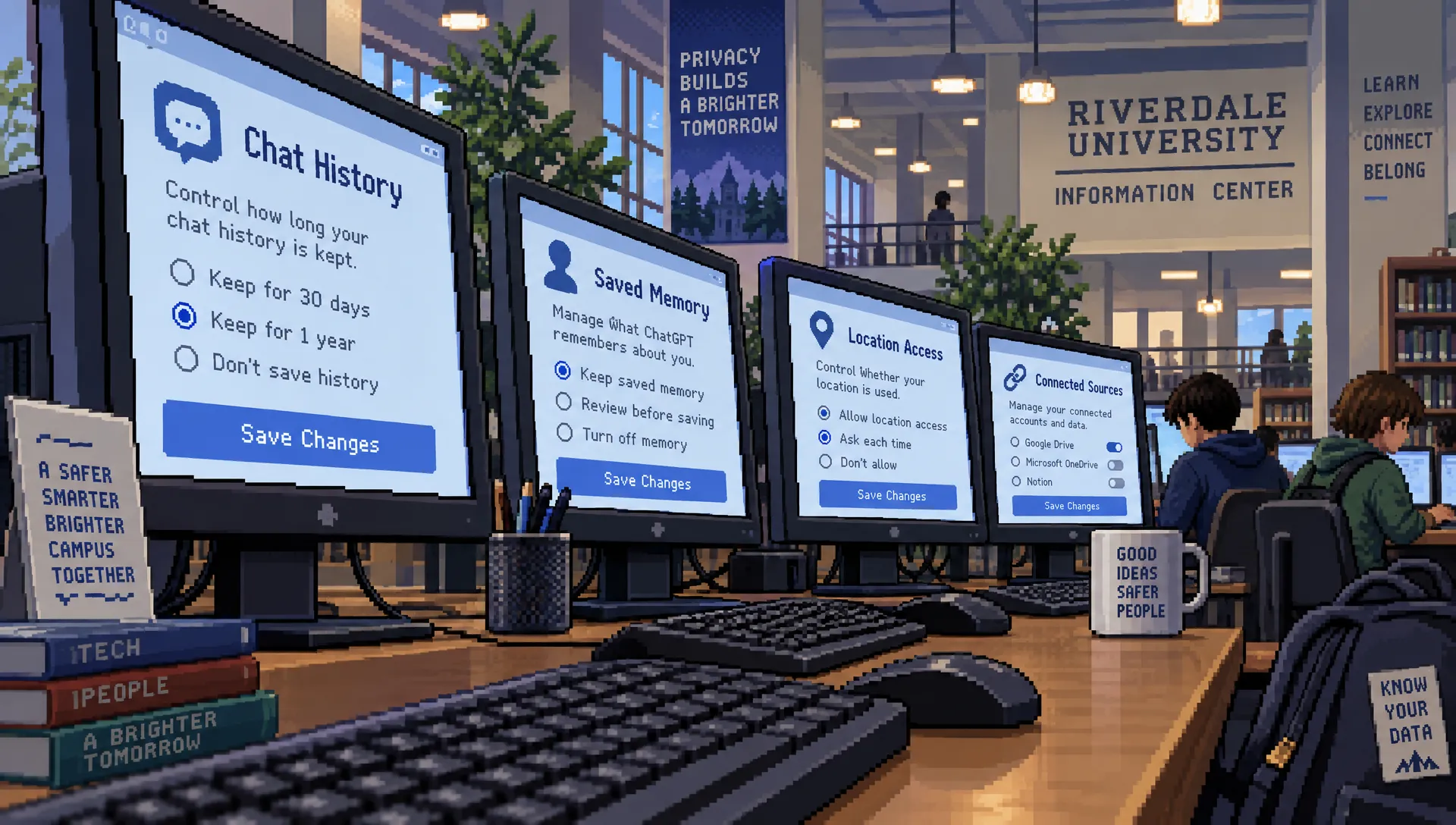
Turning off model training does not make web searches anonymous or erase saved information. Learn which settings control memory, location and chat retention, plus what to check before opening a result or searching with work data.
How ChatGPT and Google Handle Fresh Information
An answer can sound current while relying on old evidence. Learn how each platform finds updates, how to check time-sensitive claims and what publishers can do to make genuine changes easier to discover.
Where On-Page Optimization Fits in SEO
Better page copy cannot fix an indexing block or a broken lead handoff. Learn how to place on-page work within a wider SEO strategy, prioritize the right changes and measure their contribution to business results.