
How Google AI Search Changes the Customer Journey
Learn how Google AI search changes the customer journey, from discovery to purchase, and what to improve in your content and measurement.
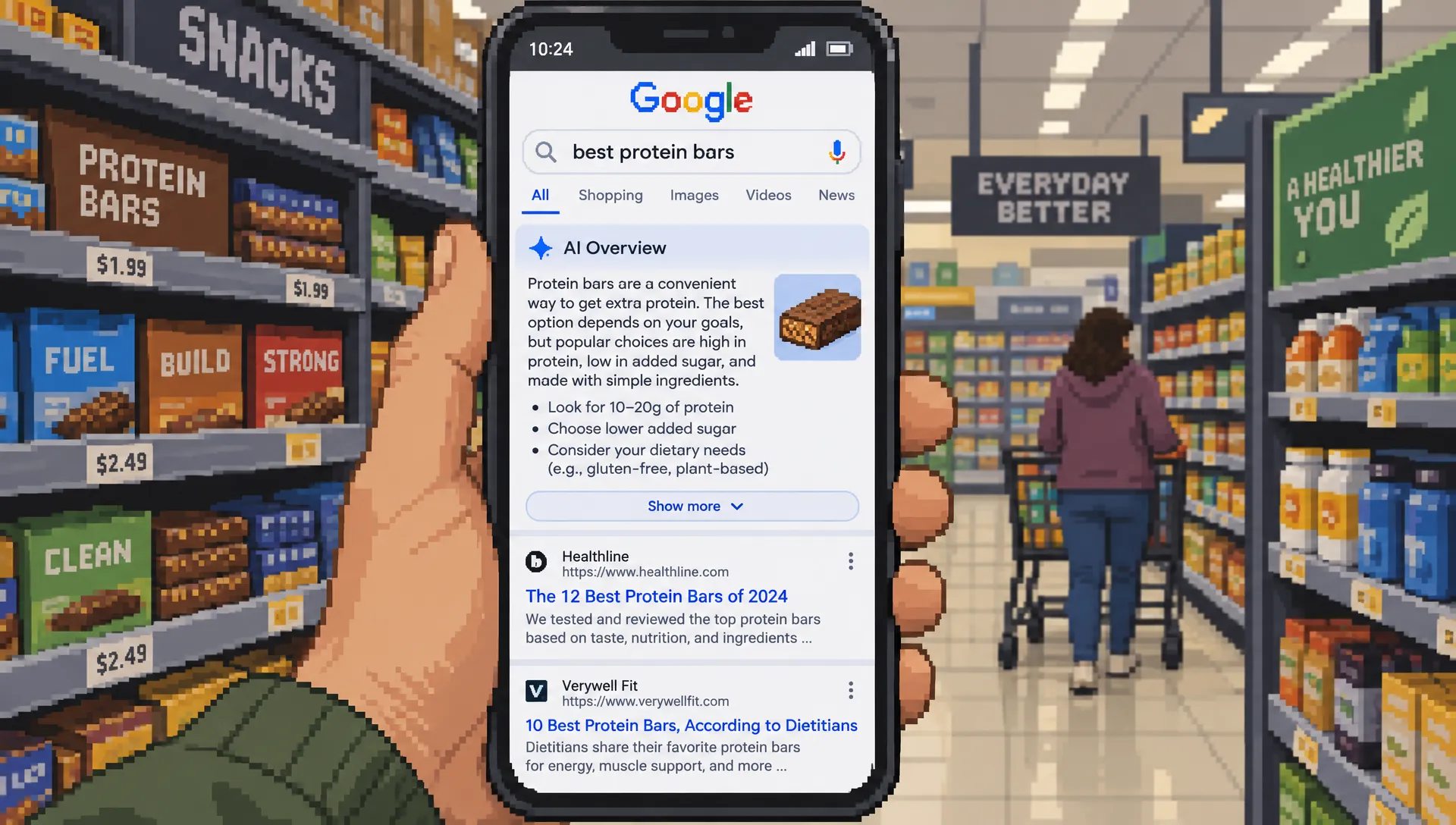
If you’re researching “ai search google,” the business impact goes beyond a new way to ask questions. Google’s AI-powered experiences can help customers define a problem, compare approaches and build a shortlist before they ever visit your website.
The customer journey does not disappear. More discovery and evaluation can happen inside search, while some website visits shift toward verification and action. That changes what your content needs to accomplish, where buyers encounter your brand and how you interpret search performance.
For marketers, the practical challenge is twofold: make your business understandable before the click, then give visitors the evidence and next steps they need after it.
What “ai search google” means for the customer journey
Two Google experiences matter here. AI Overviews provide AI-generated responses for some searches, alongside links and other search results. AI Mode supports more exploratory questions and follow-up conversations. Availability and behavior vary by market, language and account.
Neither replaces every traditional search result. Buyers can still encounter organic listings, ads, local results and product information. The difference is that an AI response can bring explanations and comparisons into the search experience itself.
Previously, a customer might open several articles to understand a category. Now, they may ask an initial question, add constraints and explore alternatives before choosing which websites deserve a visit.
That means a landing page can receive someone who already understands the category but has not yet verified your claims. Repeating a basic explanation may be less useful than answering their remaining objections.
The journey changes, but it does not become entirely clickless
Google AI search can reduce the need for certain informational clicks. It does not remove the need to evaluate providers, inspect products or complete transactions.
A Pew Research Center analysis of browsing activity in March 2025 found that users clicked a traditional search result on 8% of visits with an AI summary, compared with 15% without one. This was an observational study of a particular period, not proof that AI summaries caused the difference or a forecast for every industry.
The useful takeaway is narrower: a website visit is no longer a necessary step in every learning interaction. A zero-click interaction may still influence what someone searches for or buys later.
Use the customer’s next decision, rather than the next pageview, to map your content:
| Journey stage | Customer’s next decision | What your business should provide |
|---|---|---|
| Discovery | What problem am I solving? | Clear explanations, symptoms and terminology |
| Consideration | Which approach fits my constraints? | Comparisons, trade-offs and suitability criteria |
| Validation | Can I trust this provider? | Verifiable claims, relevant experience and clear ownership |
| Conversion | Can I proceed with confidence? | Transparent requirements and a useful next step |
| Retention | Can I get the expected value? | Accessible instructions, troubleshooting and support |
Discovery: help customers understand the problem accurately
At the discovery stage, people often describe symptoms rather than products. A business owner might ask why organic traffic has fallen even though rankings appear stable. That person may not yet know whether the issue involves changing search behavior, tracking or weaker demand.
Your content should explain those possibilities without forcing every problem toward your offer. Distinguish what the reader can diagnose independently from what requires more evidence.
For Google AI search, a useful discovery page has an explicit scope. It defines the issue, answers the central question early and explains important exceptions. Descriptive headings help readers locate those answers, but formatting cannot compensate for a thin explanation.
For example, a page about falling search traffic should separate fewer impressions, lower click-through rates and tracking failures. Those are different problems with different remedies.
The objective is not to squeeze a sales pitch into an informational answer. It is to become associated with an accurate explanation, then provide a relevant route into deeper evaluation.
Consideration: publish the trade-offs buyers actually discuss
Customers comparing solutions need more than a list of benefits. They need to understand what fits their circumstances and what does not.
A buyer evaluating search marketing support might ask whether to hire an agency, build an internal team or purchase software. A useful comparison would address internal expertise, implementation responsibility, reporting needs and the amount of work the buyer must still perform.
Google AI search makes these conditional comparisons especially relevant because users can add constraints through follow-up questions. An initial question about agencies can become a question about agencies for a specific industry, location or budget.
Write comparisons around those decision criteria. Explain when an approach makes sense, what information is missing and which assumptions could change the recommendation.
Avoid declaring your offer the best choice for everyone. A clearly stated limitation can help the right buyer recognize a fit while preventing a poor-fit inquiry.
If you publish a comparison table, identify what each category means. “Includes implementation” is only useful if the reader understands whether that covers recommendations, execution or ongoing maintenance.
Validation: make your claims easy to check
An AI answer may introduce a brand without resolving whether the buyer should trust it. That creates a distinct validation task for your website.
Visitors may arrive looking for evidence rather than education. They want to know who operates the business, whether its experience matches their needs and whether its claims survive closer inspection.
Replace vague reassurance with information buyers can examine. A case study should explain the starting situation, work performed, measurement period and relevant limitations. A testimonial should not substitute for a clear description of the service.
For Google AI search, distinguish being mentioned from being recommended. A brand can appear as an example, a source or an alternative without receiving an endorsement. Likewise, a citation does not prove that every sentence in an answer accurately represents the cited page.
Review the surrounding context when you monitor visibility. If an answer misstates your service area or capabilities, check whether your own pages contain inconsistent information. Correct the underlying information where possible, while recognizing that you cannot control every generated response.
Conversion: build for the handoff from answer to action
Someone who arrives after an extended AI-assisted search may already have a shortlist. Your conversion page should help them resolve uncertainty, not force them to restart their research.
Make the service scope, eligibility requirements and next step easy to find. If pricing depends on an assessment, explain what determines the quote and what information the customer should prepare. If you sell products, make specifications, delivery conditions and return information accessible.
A business looking for an AI SEO company in Chennai may discover providers through an AI answer, then visit a service page to check local relevance, capabilities and contact options. The page’s job is to help the buyer evaluate that specific service, not merely repeat a definition of AI SEO.
The same principle applies to other categories: match the destination to the decision the visitor is ready to make.
Do not assume every AI-influenced visitor is highly qualified. Some are still exploring. Offer a proportionate next step, such as checking service fit or viewing implementation requirements, alongside a direct inquiry route.

Retention: include the questions customers ask after buying
The journey continues after conversion. Customers may return to Google to ask how to configure a product, resolve an error or understand a service deliverable.
If those answers are missing from your public documentation, another source may supply an incomplete explanation. Where appropriate, publish clear setup instructions and troubleshooting information, with product versions or applicability conditions stated explicitly.
Google AI search does not make support content valuable for the first time. It creates another route through which customers may encounter it.
Keep account-specific instructions, private information and sensitive operational details behind appropriate access controls. Public documentation should explain general processes without exposing customer data.
Treat recurring support questions as journey research. They can reveal expectations your sales pages failed to set, terms your onboarding failed to explain or limitations that should have been visible before purchase.
Measure influence without inventing attribution
A customer might read an AI answer, search for your brand later and convert through a direct visit. Standard conversion tracking will not necessarily connect those events.
Start with what your reporting can establish. Google’s documentation on AI features and websites explains that traffic from its AI features is included in Search Console’s overall Web search reporting. That aggregation limits attempts to isolate a complete AI-driven journey from that report alone.
For Google AI search, separate three questions: whether your brand appears, whether people reach your website and whether those visitors take valuable actions. None is a substitute for the others.
Sample relevant questions to inspect visibility and accuracy, but record the query, date and context. An answer observed once is not a stable ranking or a measure of audience reach.
Then evaluate whether AI-search referrals bring qualified traffic using business outcomes rather than session counts alone. Lead fit, completed purchases and useful product engagement matter more than an undifferentiated traffic increase.
Keep those findings within a broader search measurement scorecard beyond rankings. Branded searches, customer interviews and sales conversations can supply context, but they should not be presented as precise attribution to an AI answer.
What to change first
You do not need a separate page for every possible prompt. Start with one commercially important customer journey and identify its largest information gap.
Use this short audit to choose a practical first project:
- Review discovery questions: Compare the language on your website with actual questions from prospects, sales calls and support requests.
- Inspect evaluation content: Find the comparisons and objections customers must currently resolve somewhere else.
- Check conversion destinations: Confirm that visitors can verify fit, understand requirements and take the next step without unnecessary friction.
- Assign an owner: Give someone responsibility for keeping claims, service details and supporting evidence consistent.
Google AI search does not eliminate the technical foundations of visibility. Pages still need to be accessible to search systems and useful to people. Google’s guidance does not require a special AI schema or a separate AI text file to appear in its AI features.
Use this journey audit to prioritize a broader AI SEO strategy, rather than turning it into a disconnected program of prompt-specific content production.
Frequently asked questions
Does Google AI search replace the marketing funnel? No. People still discover needs, evaluate options and make decisions. What changes is where those activities happen and how many website visits they require. Some buyers will arrive with more context, while others will still need substantial guidance.
How do customers access Google’s AI search features? AI Overviews can appear within eligible Google Search results. AI Mode offers a conversational search experience where available. Access varies, and not every query produces an AI response.
Will being cited in an AI answer increase sales? Not necessarily. A citation can create exposure without producing a visit or purchase. Its value depends on the question, how your business is represented and whether the customer later takes a relevant action.
Should businesses stop publishing informational content? No. Publish information that resolves real customer questions and supports your expertise. Reduce interchangeable summaries, but retain useful explanations, original evidence and material that helps customers make better decisions.
Start with the next customer decision
Choose one important offering and map what customers need to discover, compare, verify and do. Fix the weakest handoff first. That gives your content and website a clear purpose, whether the next customer arrives through an AI answer, a traditional result or a branded search.
Read more

How to Use AI Content Optimization to Refresh Old Articles
Old articles need more than a new date and a quick rewrite. Learn how to prioritize the right pages, use AI to find meaningful gaps and publish updates you can verify and measure.

Is AI Search Sending Your Website Qualified Traffic?
AI referrals can look impressive without producing customers. Learn how to separate trackable visits from hidden influence and measure buyer fit, qualified leads and revenue before investing more in visibility.

Search Optimization Metrics That Matter Beyond Rankings
A higher ranking can hide weaker traffic and fewer customers. Learn which metrics connect organic search and AI citations to qualified visits, conversions and revenue, plus how to build a scorecard that supports better decisions.