
7 AI Writing Mistakes That Undermine SEO
Avoid seven AI writing SEO mistakes that weaken search performance. Learn practical fixes for intent, accuracy, originality and measurement.

The biggest AI writing SEO mistakes are rarely spelling errors. They happen when a fluent draft answers the wrong question, repeats what competitors already say or presents an invented claim as fact. Publishing faster makes these problems harder to catch, especially when a team treats a finished draft as a finished article.
Google’s guidance on AI-generated content focuses on content quality rather than whether a human or a machine produced the words. The practical question is therefore not whether to use AI, but where human judgment must remain in the process.
These seven mistakes offer a useful prepublication audit.
1. Writing before defining the reader’s actual task
A keyword is not a complete brief. Someone searching for a definition needs a different page from someone comparing vendors or troubleshooting a failed implementation. AI can produce a convincing article for any of those tasks, including the wrong one.
Start your AI writing SEO workflow by defining what the reader should be able to do after reading. Then examine the current search results for clues about the expected format, level of detail and buying stage. Treat those results as evidence, not instructions to copy.
For example, an article targeting a software migration problem might need a troubleshooting sequence, prerequisite checks and recovery options. A broad introduction to migration will not satisfy that need, however polished it sounds.
The fix: Add three constraints to the brief: the reader’s situation, the decision or action they need to take and what the page will deliberately leave out. Give the model those constraints before asking for an outline.
Finally, inspect the introduction and first substantive section. If the reader must pass through several paragraphs of background before reaching the promised answer, move that answer forward. Necessary context can follow it.
2. Rewriting competitors instead of contributing something useful
Summarizing the top-ranking pages can reveal common questions. It cannot, by itself, give your article a reason to exist.
A draft assembled from familiar definitions and recycled advice may be accurate yet interchangeable. The weakness is not that AI wrote it. The weakness is that readers gain nothing they could not obtain from the existing results.
For an AI writing SEO brief, specify the contribution before generating the prose. That contribution might be a worked calculation, a documented test, an annotated example or a decision framework with clear limitations. It does not have to be proprietary research.
Suppose every competing article recommends creating a content calendar. Your contribution could explain how to prioritize five competing topics when the team can publish only twice a month. State the assumptions, show the trade-offs and explain when your recommendation would change.
The fix: Ask the editor, not the model, to complete this sentence: “This page is useful because it helps the reader understand or do something the existing results leave unresolved.”
If the answer is merely “it is more comprehensive,” identify what that extra coverage actually enables. More sections are not automatically more value. Sometimes a narrow, well-supported answer serves the reader better than a longer overview.
3. Accepting plausible facts, citations and experience claims
Generated text can contain a real organization attached to a nonexistent report, a valid link that does not support the sentence or a product feature that sounds reasonable but is unavailable.
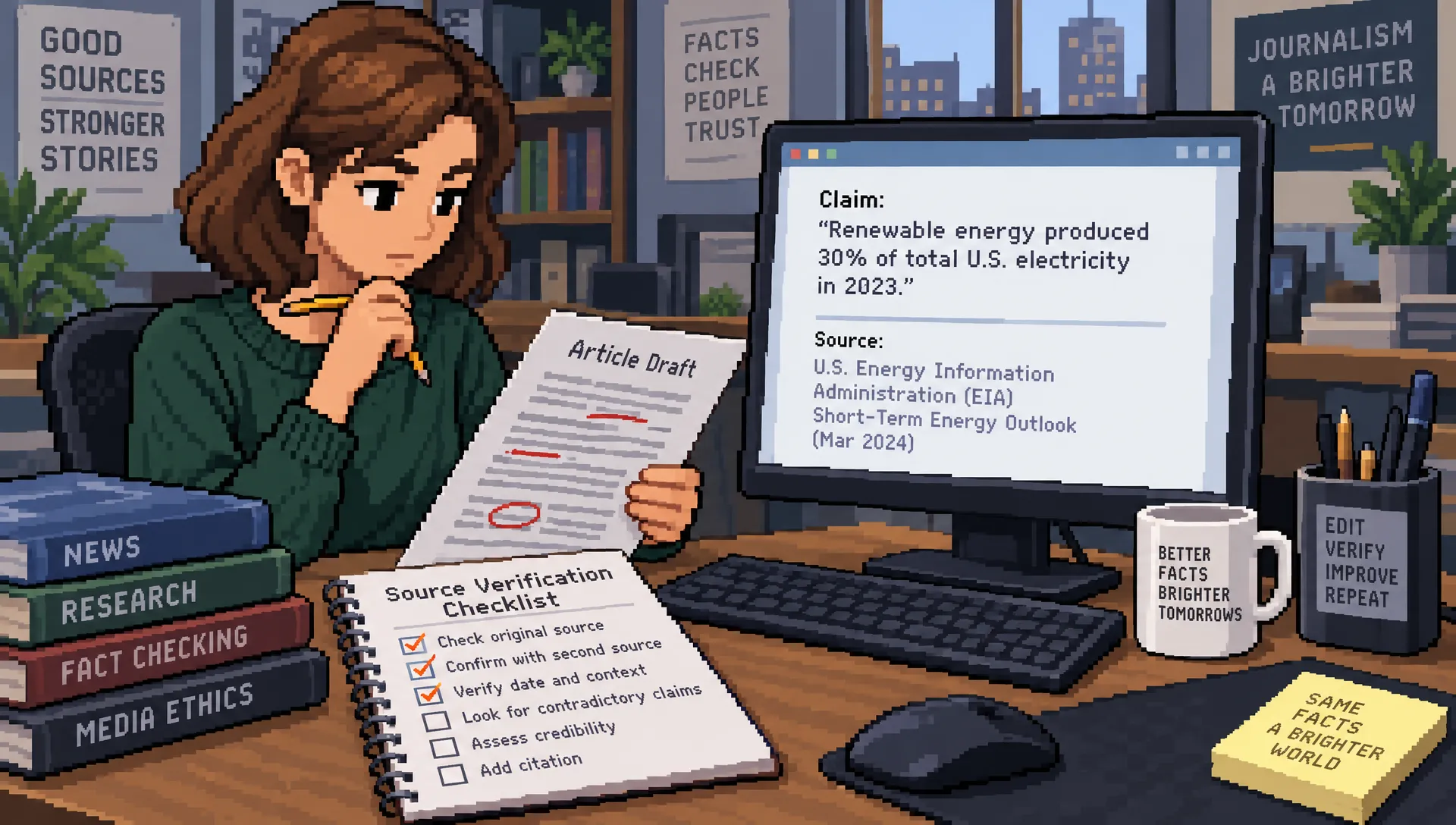
This makes source verification a core AI writing SEO responsibility, not a final proofreading task. Opening a citation is only the beginning. The editor must check whether the source supports the precise claim, including its date, population and limitations.
Use a simple evidence standard:
| Claim type | What to verify before publishing |
|---|---|
| Statistic | Original source, measurement period, sample and relevant caveats |
| Product capability | Current official documentation and any plan or regional restrictions |
| Recommendation | Supporting evidence, reasoning and situations where it may not apply |
| Firsthand experience | Records showing that the named person or team actually did the work |
The fix: Require source material alongside the brief and keep unsupported claims visibly marked during drafting. If a claim cannot be verified, remove it, narrow it or label it as a hypothetical example.
Never let a model invent statements such as “we tested,” “our clients achieved” or “in our experience.” Those phrases require real experience and an accountable source.
Clear sourcing also helps readers assess passages they encounter outside the full article. It does not guarantee inclusion or citation in an AI-generated answer.
4. Confusing AI writing SEO with keyword repetition
A model can follow an instruction to repeat a phrase without understanding whether the resulting page is useful. That often produces awkward headings, repetitive introductions and paragraphs that restate the same point using slightly different vocabulary.
Relevant terminology belongs in the article, but placement should follow meaning. Use the main topic clearly in the title, opening and an appropriate heading. Then cover the concepts, examples and questions necessary to resolve the reader’s task.
A guide about inventory forecasting, for instance, may need to explain lead times, seasonality and forecast error. Repeating “inventory forecasting software” does not replace that coverage.
The fix: Review the draft at two levels. First, check whether each section adds a distinct answer. Second, read the sentences aloud and remove wording that exists only to accommodate a keyword.
Structure matters too. Descriptive headings, explicit definitions and answers placed close to their questions make information easier to navigate. A comparison table is useful when readers need to compare; it is unnecessary when two clear sentences would do the job.
Avoid replacing every repeated word with a synonym. Consistent terminology often improves clarity, especially in technical subjects. The goal is to remove redundant ideas, not make the vocabulary artificially varied.
5. Generating multiple pages that serve the same purpose
Low production costs make it tempting to create a separate article for every keyword variation. The result can be several pages answering essentially the same question, each with slightly different wording.
Before expanding an AI writing SEO program, map proposed topics to existing URLs. The key question is whether each page serves a meaningfully different reader task, not whether its target phrase differs.
Overlapping pages can split useful information across URLs and make internal linking less coherent. Similar pages do not always harm performance, and multiple URLs appearing for a topic are not proof of a problem. Investigate the intent and performance before deciding what to consolidate.
Google’s scaled content abuse policy addresses generating many pages primarily to manipulate rankings rather than help users, regardless of how the content is created. Publishing with AI is not automatically abuse; purpose and value matter.
The fix: Give every proposed page a distinct audience, task and contribution. If you cannot explain the difference from an existing page, consider updating that page instead.
For teams planning a larger rollout, the decision criteria for when AI-generated SEO content is worth scaling help separate a repeatable publishing process from an expanding editing backlog.
6. Treating the draft as the entire SEO deliverable
An excellent article can still underperform if its published URL is inaccessible to crawlers, accidentally excluded from indexing or difficult to use on a phone. Content generation does not resolve those problems.
Review the rendered page, not just the document. Check that important text appears correctly, links work and tables remain readable on smaller screens. Confirm the intended indexing settings and canonical URL with whoever owns technical SEO.
Also verify the path into and out of the article. A relevant internal link helps readers discover supporting information. A useful next step helps them apply what they learned. Neither should be added mechanically to meet a quota.
These are broader publishing responsibilities rather than problems unique to AI. This overview of SEO mistakes involving page speed, mobile usability and technical foundations provides a complementary check beyond the manuscript itself.
The fix: Make publication approval include both an editorial review and a live-page review. Assign an owner to each, even if one person handles both roles.
A reliable AI writing SEO process ends with a usable, discoverable page, not an exported draft. Technical eligibility does not guarantee rankings or AI-search citations, but avoidable delivery problems can prevent strong content from getting a fair opportunity.
7. Measuring output instead of search and business outcomes
Articles published, words generated and hours saved measure production. They do not establish whether the content reaches the right audience or helps the business.
Choose a primary outcome before publishing. A troubleshooting article might aim to resolve a support problem. A commercial comparison might aim to generate qualified evaluation requests. Those pages should not be judged by the same conversion target.
Use Google Search Console to examine the queries associated with the page, impressions and clicks. Then connect that evidence with engagement or conversion data appropriate to the page’s purpose. If the queries differ from the intended task, revisit the brief rather than simply adding more keywords.
The fix: Record the publication or revision date, intended audience, target task and primary outcome. Review performance after enough time and traffic have accumulated to support a useful judgment. Avoid declaring success from a handful of visits.
For AI writing SEO, efficiency matters only alongside quality and outcomes. Track editing effort, factual corrections and maintenance needs as well as production savings. A fast draft that requires extensive repair may not reduce total costs.
A broader set of search optimization metrics beyond rankings can help connect visibility with qualified traffic and conversions. Treat changes cautiously: seasonality, competitors and other website updates can affect results, so a before-and-after comparison alone does not prove causation.
Frequently asked questions
Does Google penalize all AI-written content? No. Google’s published guidance does not prohibit content simply because AI helped create it. Quality, usefulness and compliance with spam policies matter. Generating pages primarily to manipulate rankings can violate those policies regardless of the production method.
What should you always check before publishing AI-generated content? Verify search intent, factual claims, citations and product details. Confirm that the article contributes something useful, does not invent firsthand experience and works properly on the live page. A named editor should own the publication decision.
Can better AI-written content guarantee citations in ChatGPT or Perplexity? No. Accurate, accessible and clearly sourced content gives readers a stronger resource, but citation selection varies by platform, query and retrieval behavior. There is no wording formula that guarantees inclusion.
Use AI to accelerate drafting, not bypass judgment
For your next article, identify the weakest of these seven checks and fix it before increasing publishing volume. A better brief, a verified example or a live-page review may be more valuable than another generated draft.
If your goal also includes visibility in AI-generated answers, build those editorial checks into a broader AI search optimization strategy rather than treating writing as the whole process.
Read more

An SEO Checklist for Reviewing AI Content Before Publishing
An AI draft can read well and still contain errors, miss search intent or fail technical checks. Use clear review gates to decide what to publish, what to revise and what should stay on hold.

Google Search Optimization for Ecommerce Category Pages
Turn category pages into useful shopping destinations, not walls of SEO copy. Learn how to control filter URLs, strengthen product discovery and measure whether organic visits lead to revenue.

How a Generative AI Search Engine Selects Sources to Cite
AI citations depend on more than ranking first. See how retrieval, evidence and passage relevance shape source selection, then use a practical checklist to improve your pages without chasing unproven ranking tricks.